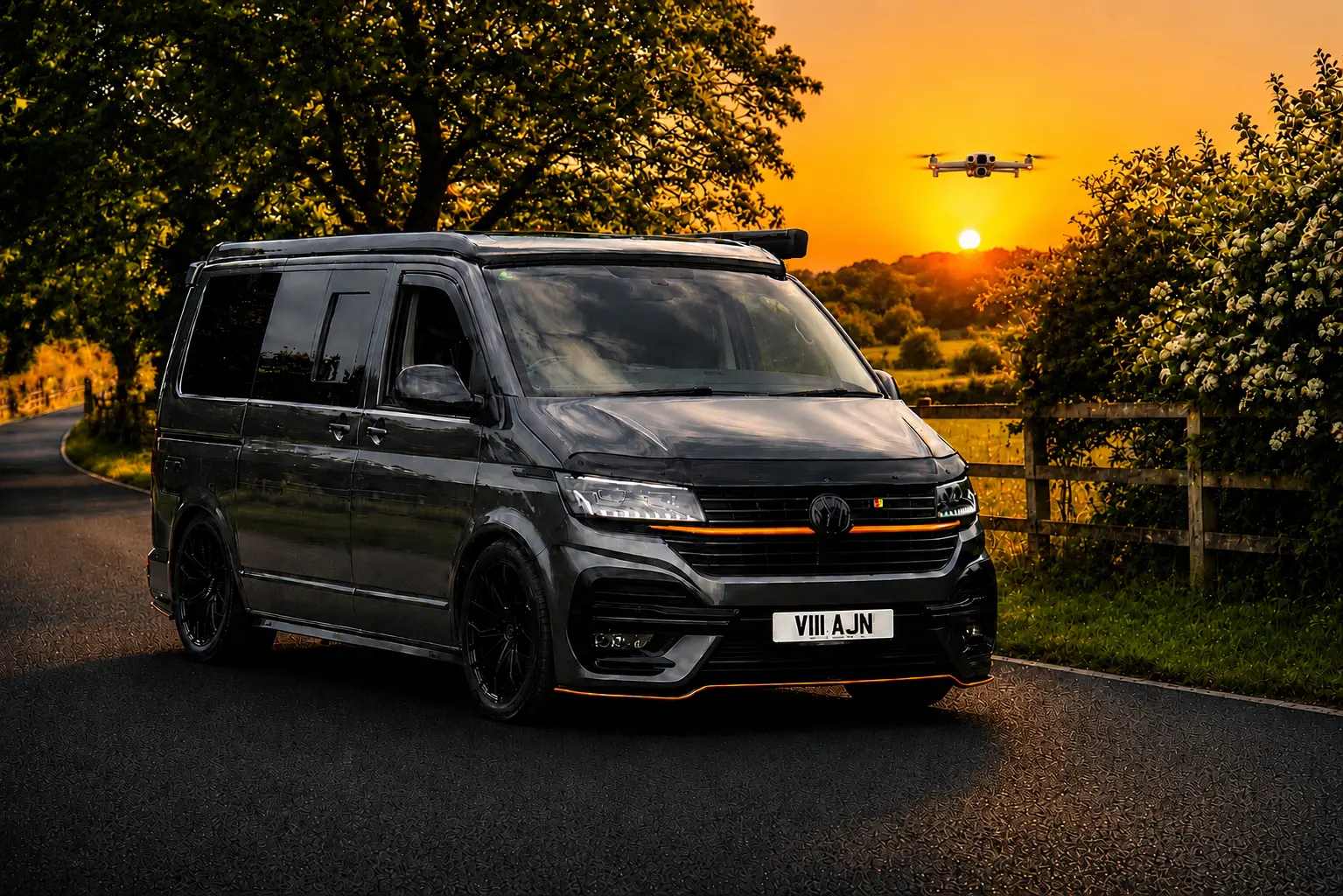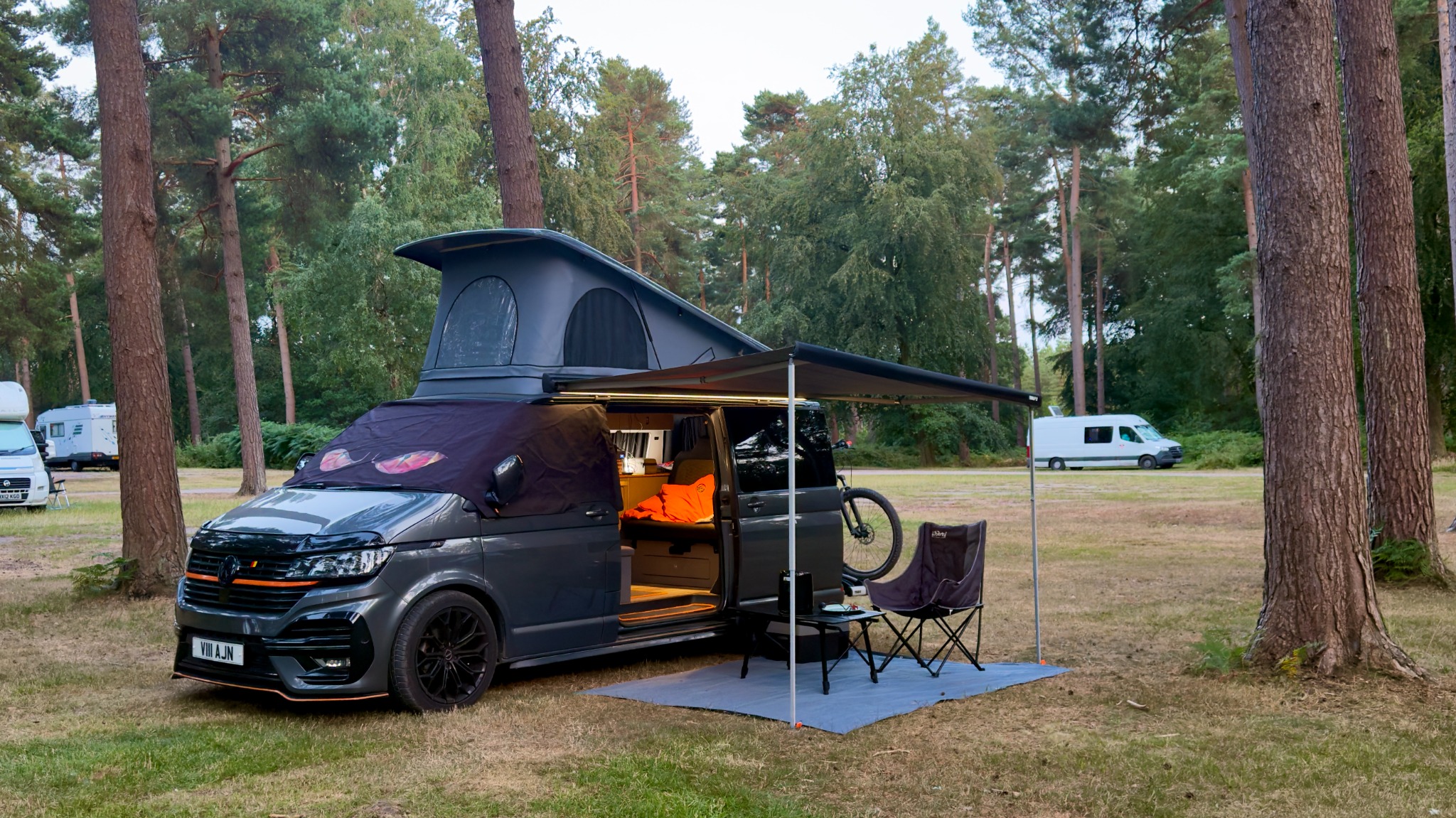
Some people go camping to get away from electricity. I prefer to take electricity with me—quietly, safely and in enough orange-trimmed boxes to make a small campsite wonder whether National Grid has opened a branch office beside Vanilla. My Jackery fleet is not one oversized battery bought for bragging rights. It is a four-unit system in which every power station has a name, a role and a reason for coming along.
Welcome to the Nix National Grid
The complete line-up is Forge, Workhorse, Kindle and Pocket Sarge. In ordinary catalogue language they are the Jackery Explorer 2000 v2, Explorer 1000 v2, Explorer 300D and Explorer 240 v2. Together they hold 3,656Wh of energy and weigh 34.4kg. Their rated outputs add up to 4,300W, although that is spread across four separate units rather than emerging from one superhero socket. Electricity, like an HGV yard, still benefits from sensible traffic management.
The point of owning four sizes is not to run all four flat out. It is to match the power station to the job. Taking Forge to charge one phone would be like sending an articulated lorry for a pint of milk. Asking Kindle to power the air fryer would be the opposite mistake: brave, brief and electronically unpopular. The fleet works because the heavy jobs, everyday jobs and small-device jobs have their own specialists.
All four use long-life LiFePO4 battery chemistry. That matters because these are working batteries, not ornaments. They will be charged, carried into Vanilla, used at festivals, asked to feed cameras and laptops, and brought home again. A long cycle life means I can use the capacity without treating every percentage point like a family heirloom.
Forge: the flagship with broad shoulders
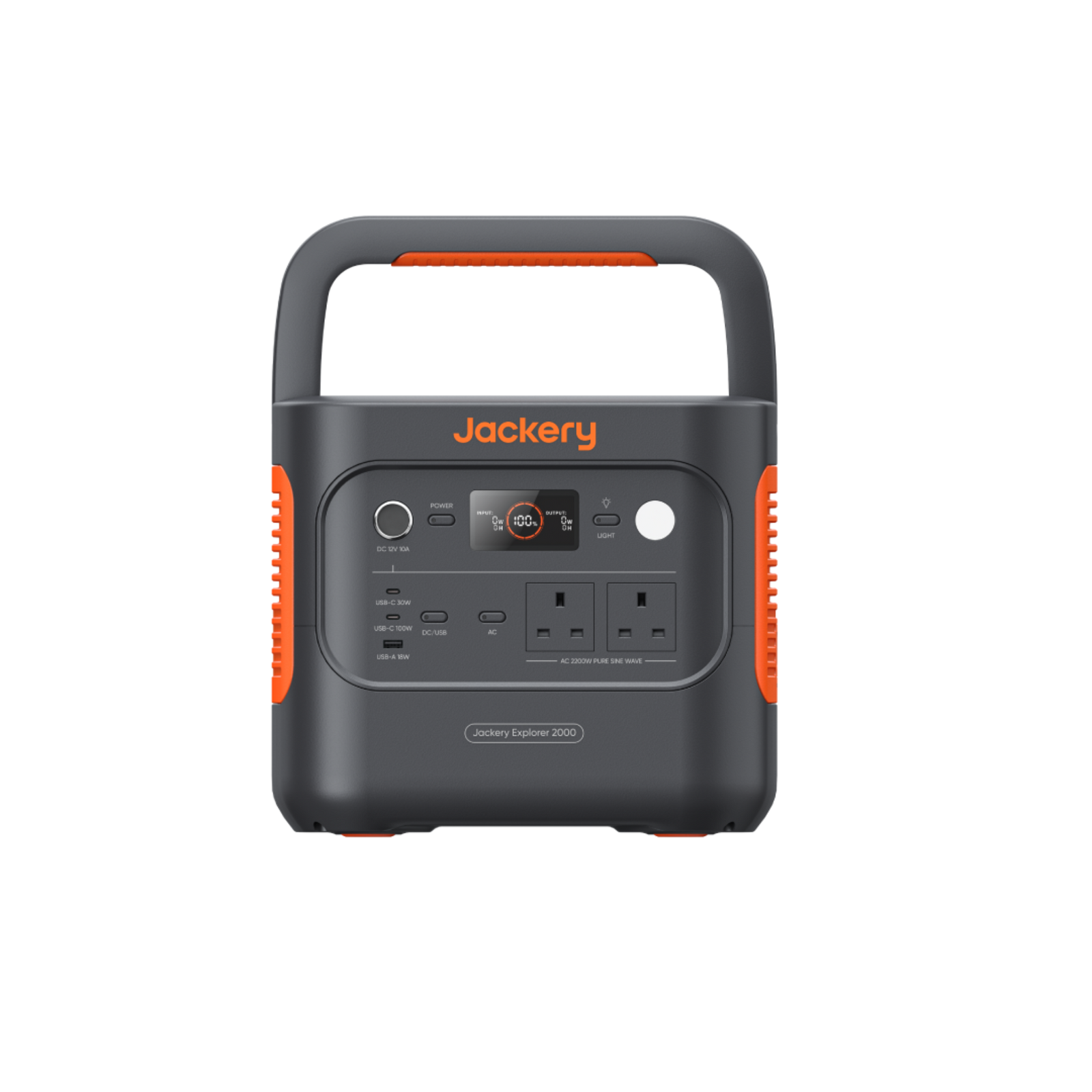
Forge is the Jackery Explorer 2000 v2 and the name suits it. With 2,042Wh of capacity and 2,200W of rated AC output, this is the unit for jobs that involve heat, motors, a long evening or several hungry devices at once. It has two UK mains outlets, USB-A and USB-C—including a 100W USB-C port—and enough confidence to make off-grid cooking feel like a normal decision rather than a science experiment.
At 17.5kg, Forge is not the one I carry around for the joy of carrying things. It lives where its strength is useful: beside Vanilla for a static camp, at a festival where generators are unwelcome, or at home when portable backup power suddenly stops being a hobby and starts being very reassuring. Jackery quotes 4,000 battery cycles and rapid mains charging, with its emergency mode able to get from empty to 80% in 52 minutes.
Forge is also the natural charging station for Torque. The bike carries a 600Wh Bosch battery, so a real recharge involves conversion losses and common sense rather than simply dividing two brochure numbers. Even so, Forge has the capacity to put serious miles back into the bike while still leaving power for the rest of camp. A ride can start from Vanilla, explore farther than my front door and return to a base that can refill the adventure.
Hook-up is useful. Freedom is better. My Jackerys turn power from a campsite facility into something I can carry, ration, recharge and deploy wherever Vanilla stops.

Workhorse: the one that quietly runs camp
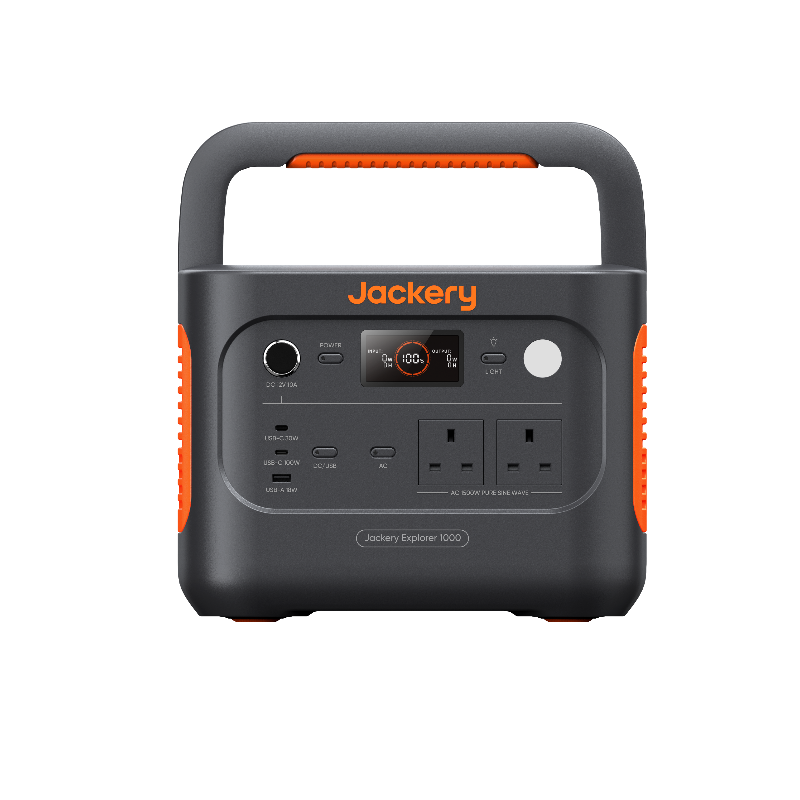
Workhorse is my Explorer 1000 v2: 1,070Wh, 1,500W rated AC output and 10.8kg. It is the sweet spot of the fleet—large enough to run substantial kit, small enough to move without holding a committee meeting first. If Forge is the festival generator room, Workhorse is the everyday foreman walking around Vanilla with a clipboard.
Its 1,500W output comfortably covers my 900W Cosori air fryer, while the capacity is equally happy doing less dramatic work for longer: Frostina the Alpicool G22 fridge, the Nebula Capsule 3 Laser projector, Fire TV, Sonos Roams, MacBook, iPad, phones and the steady queue of camera batteries that follows a Nix Drones day. Jackery’s own examples put a 100W projector at around eight hours and a 60W portable refrigerator at around 15 hours, useful ballpark figures rather than promises carved into a battery case.
Workhorse is also the unit most likely to come away even when the trip does not appear power-hungry. That is the magic of a useful middleweight. It can keep ordinary camp life going all weekend, yet it still has the muscle for a kettle, cooking appliance or unexpected demand. Most power systems are judged during a crisis; Workhorse earns its reputation by making sure ordinary evenings never become one.

Kindle and Pocket Sarge: the small-unit department
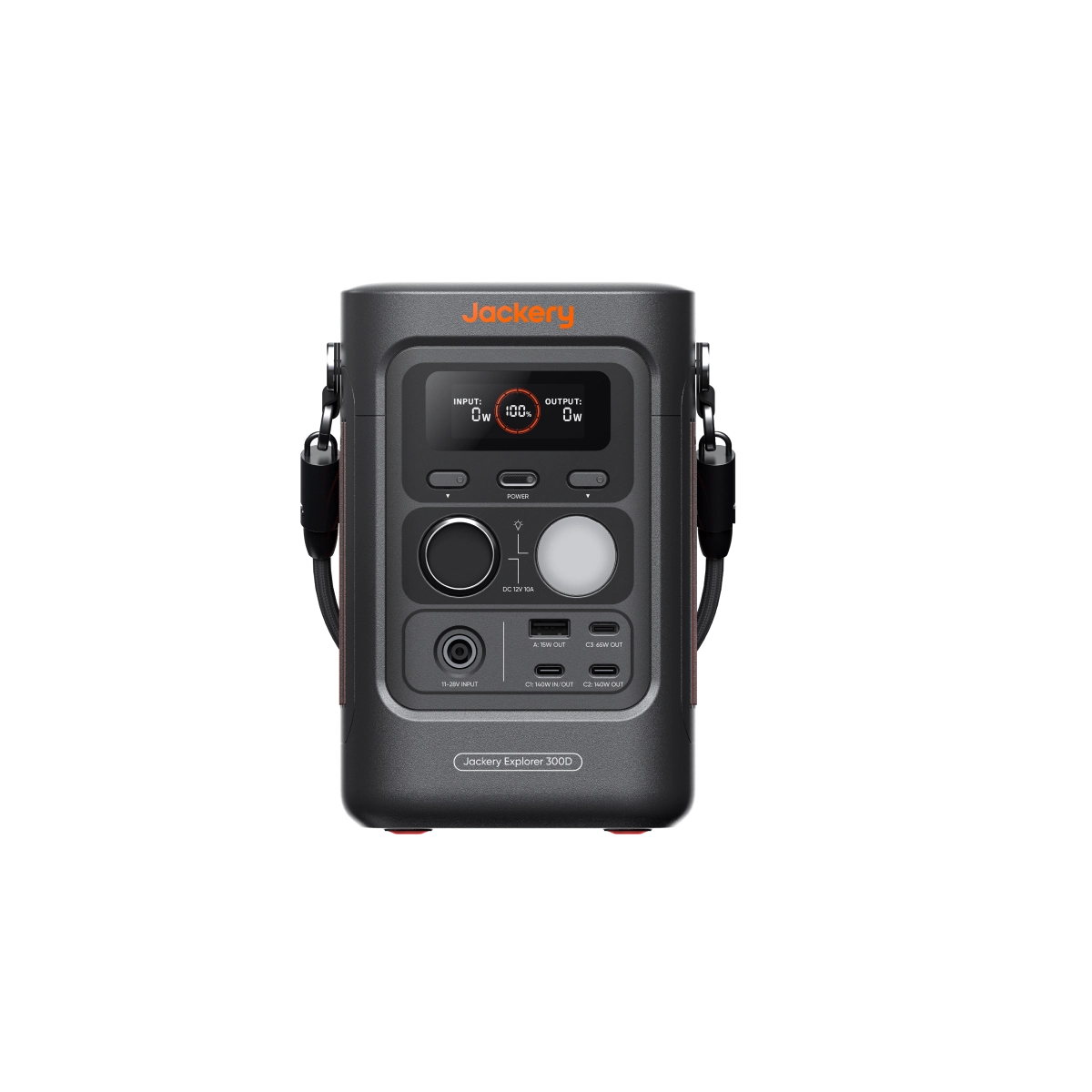
Kindle is the Explorer 300D: 288Wh, 2.5kg and designed around modern DC and USB power. It can deliver up to 300W across its outputs and has three USB-C ports, USB-A and a 12V car socket. The crucial correction is that Kindle does not have a 230V mains socket. That is not a flaw hidden in small print; it is the whole idea. Kindle is a compact, silent power bank on parade for laptops, drones, cameras, phones and other DC-native kit.
Its 140W USB-C capability is particularly useful now that so much of the Nix kit can charge without an AC brick. The same port can move meaningful power into a laptop or compatible charging hub, while the fanless design stays almost silent. Kindle is what I take when I want plenty of useful energy without the weight and conversion losses of a full mains power station.
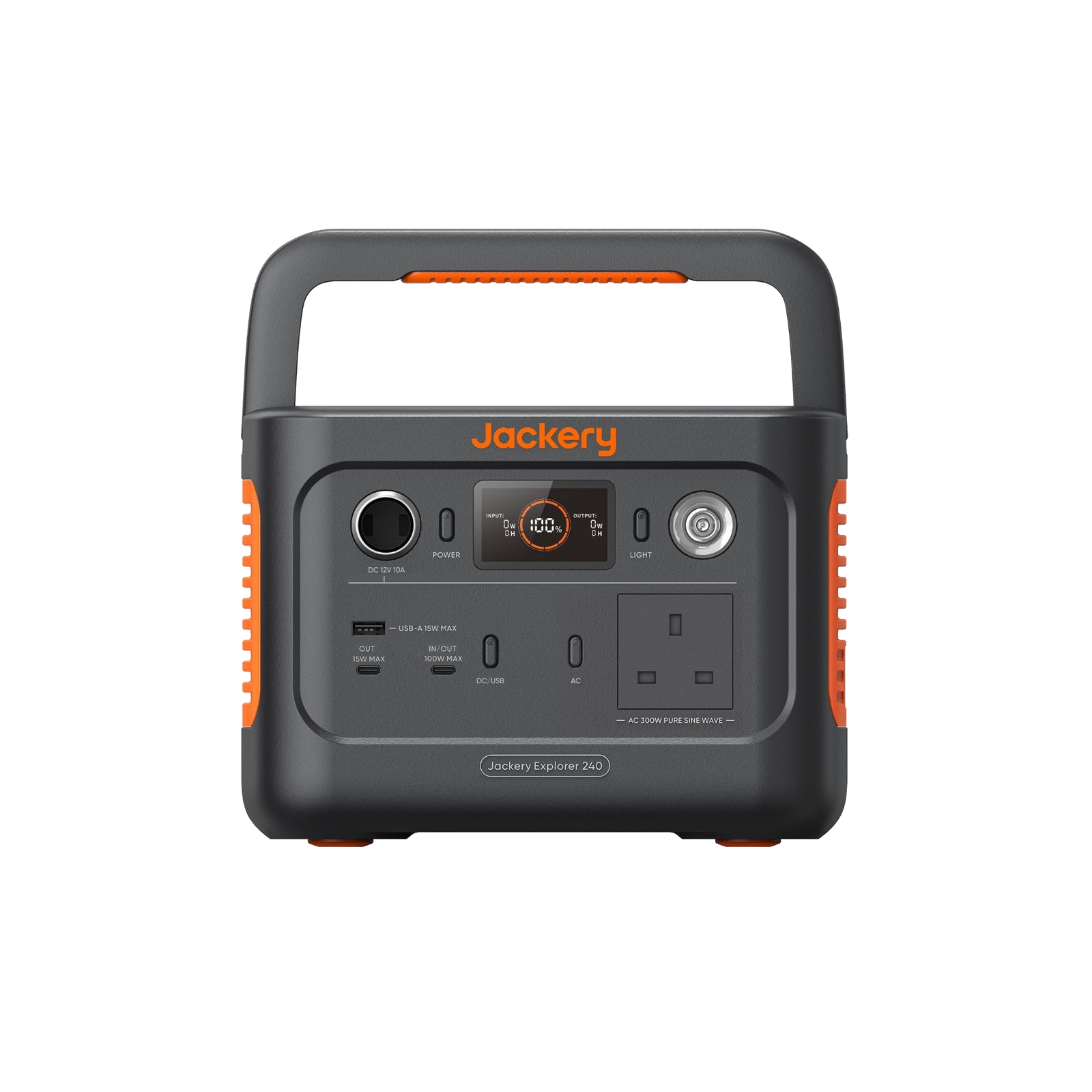
Pocket Sarge is the Explorer 240 v2: 256Wh, 300W AC output and 3.6kg. It retains a proper UK mains socket, which makes it the small-unit answer when one awkward charger still expects 230V. Day trips, short overnight stops, router duty, lights, a laptop or a few camera batteries are its natural beat. Kindle and Pocket Sarge are close in capacity but different in character—one is the USB-era specialist; the other keeps a little mains electricity in its back pocket.

Vanilla already has power—this is why Jackery still matters
Vanilla is not electrically helpless without the orange boxes. The campervan has its own AGM leisure battery, Victron Orion DC-to-DC charging, SmartShunt monitoring, roof solar and the systems that keep the built-in fridge, lights and Webasto heater doing their jobs. That fixed installation is the dependable ship’s wiring. The Jackerys are the portable auxiliary fleet.
Keeping the two layers separate gives me choices. I can leave the leisure battery focused on the equipment permanently wired into the van while a Jackery runs the projector, charges drones, handles cooking or powers Frostina outside. If I move the awning, set up a screen away from the van or need electricity beside Torque, the power comes with me instead of stretching an extension lead across camp like a trip hazard with ambitions.
Vanilla can also feed the portable system while travelling. My planned charging route uses the leisure side through fused Anderson connections and a 12V-to-24V converter into the Jackery solar input. Solar, mains and vehicle charging each have their moment. The principle is traditional and sound: generate while the opportunity exists, store carefully, then use the right supply for the right load.

Dinner, cinema and the no-hook-up weekend
The moment portable power becomes interesting is not when a display says 100%. It is when dinner appears. My 900W Cosori air fryer will run from both Workhorse and Forge. That means pies, bacon rolls, chicken and chips, toasties, freezer-raid snacks and the sort of evening meal that makes a damp campsite feel less like endurance and more like civilisation.
Heating food is a high-draw job, so I treat it as a planned sprint rather than an all-night background load. Workhorse handles it comfortably within its 1,500W rating; Forge barely raises an eyebrow. Induction cooking is another serious use for the larger units. The smaller Jackerys stay on communications and camera duty while the big lads report to catering.
After dinner, the power demand changes character. The Nebula projector, Fire TV and Sonos Roams turn Vanilla into a tiny cinema. Phones and cameras charge quietly. Frostina keeps the cider cold. At a festival where generators are banned and hook-up is absent, that silent transition from kitchen to cinema is the difference between merely having battery capacity and having a complete off-grid evening.

Torque, drones and the travelling edit suite
Torque, Zoom, Nemesis, Sneaker, Twitch, the DJI Action 4, Canon EOS 70D, Ray-Ban Meta glasses, phone, iPad and MacBook all arrive with their own batteries and their own opinions about cables. The Jackery fleet turns that collection from a charging crisis into a rota. Kindle and Pocket Sarge cover the small kit; Workhorse becomes the editing desk; Forge waits for the large demand or the long weekend.
For drone flying, portable power is less about keeping an aircraft permanently airborne and more about preserving options. A good location may deserve another battery. A day of filming may need the controller, phone, Action 4 and laptop topped up before the edit begins. With solar or vehicle charging feeding the system, the camera team can work well beyond the first set of battery indicators.
Torque adds the largest single rechargeable battery in the adventure department. Being able to restore useful range away from home changes route planning. Vanilla becomes the road base, Towzer carries the bike, the Jackerys hold the reserve and the drones explain the landscape from above. It is an absurdly satisfying chain of machines helping other machines do interesting things.

Sunshine in, cold cider out
My SolarSaga 80W panel is the original portable solar wing of the operation. In good conditions it will not refill Forge in an afternoon—the laws of physics remain stubbornly unimpressed by branding—but it is excellent for offsetting smaller daily loads, topping up the compact units and stretching a weekend. Larger panels can feed the 400W solar inputs on Forge and Workhorse when a more ambitious off-grid setup is needed.
Solar works best when I stop thinking of it as a magic refill button. I charge fully before leaving, harvest while the sun is useful, run DC devices directly where possible and reserve AC conversion for kit that genuinely needs it. A panel producing power while Frostina cycles, drone batteries charge and the projector waits for evening is not replacing the grid in one heroic gesture. It is quietly preventing the battery percentage from falling as fast.
That is the verdict on the whole Nix National Grid. Forge supplies strength. Workhorse supplies balance. Kindle brings silent modern charging. Pocket Sarge brings small-scale mains flexibility. Together they let Vanilla camp farther from the orange hook-up bollard, let Torque roam beyond the home charger and keep the Nix cameras ready for whatever happens next. Sunshine goes in. Stories, hot food, films and cold cider come out. That feels like a very fair exchange.