

NIX STORIES⚡ VANILLA
⚡ VANILLA
POWERED.
HOW I BUILT A TWO-WAY NIX ENERGY SYSTEM FOR LIFE OFF-GRID
VICTRON · JACKERY · SOLAR · AGM · ANDERSON · OFF-GRID
NOT JUST MORE POWER.
MORE WAYS TO MOVE IT.
Vanilla started with a conventional campervan leisure-battery system. It has gradually become something much more interesting: a flexible energy ecosystem combining roof solar, alternator charging, campsite hook-up, Victron control and monitoring, and a fleet of portable Jackery power stations.
The clever part is not simply how many ways I can generate electricity. It is that I can now move stored energy in either direction between Vanilla and the Jackerys. Sunshine or a drive can end up in portable storage; a charged Jackery can become reserve energy for the van. The aim is flexibility, not an electrical parlour trick.
ONE TRADITIONAL HEART.
MULTIPLE ENERGY ROUTES.
☀ SOLAR→SMARTSOLAR→110Ah AGM
🚐 ALTERNATOR→ORION→110Ah AGM
⚡ EHU→SARGENT→110Ah AGM
110Ah AGM→ANDERSON→JACKERY
JACKERY→BLUE SMART→110Ah AGM
SUNSHINE BECOMES
USEFUL 12-VOLT ENERGY.
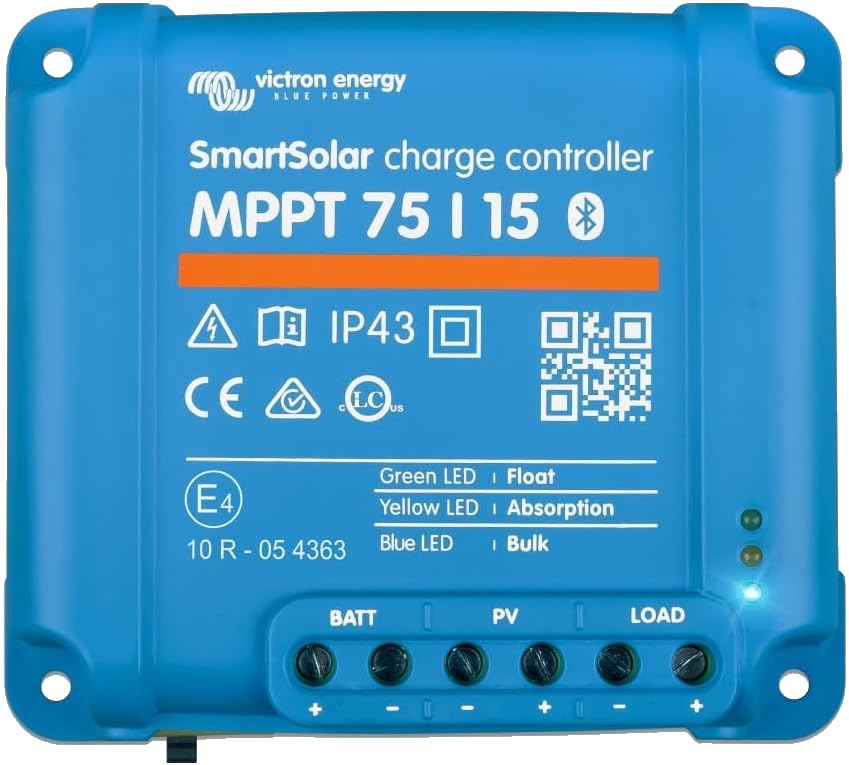
SOLAR PANEL→SMARTSOLAR MPPT 75/15→110Ah AGM
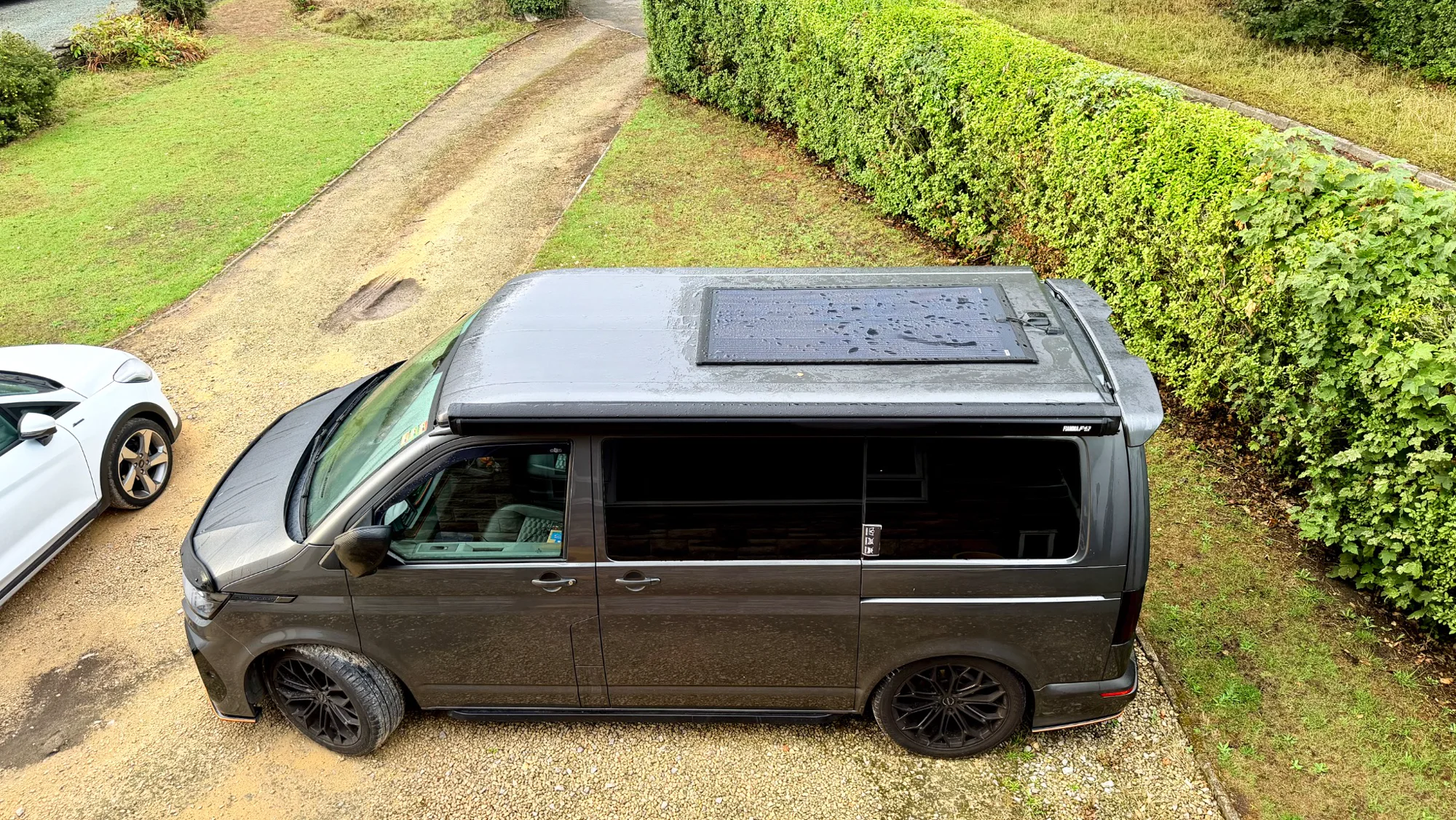
The new roof panel, fitted neatly to Vanilla by Dapa Campervans, feeds the van through a Victron SmartSolar MPPT 75/15. It continually seeks the panel’s productive operating point and converts changing solar input into a controlled battery charge.
The 75/15 model can supply up to 15A to the battery. That is the controller’s maximum—not a promise that a grey morning will suddenly become enthusiastic. Panel output, temperature, shading, battery state and wiring losses still decide what is actually available.
14.40VABSORPTION→13.80VFLOAT→13.20VSTORAGE
NIX SMARTSOLAR SETTINGS
- Battery voltage
- 12V
- Charger
- ON
- Maximum charge current
- 15A
- Battery preset
- User Defined
- Absorption voltage
- 14.40V
- Float voltage
- 13.80V
- Storage voltage
- 13.20V
- Re-bulk offset
- 0.10V
- Absorption
- Adaptive
- Maximum absorption
- 6 hours
- Tail current
- 2A
- Automatic equalisation
- OFF
- Temperature compensation
- −16mV/°C
- Low-temperature cut-off
- OFF for AGM
These are the settings recorded for my particular 110Ah AGM installation. Battery-maker guidance and the real installation take priority; they are not universal AGM numbers.
THE ROAD BECOMES
A CHARGING SOURCE.
T6.1 ALTERNATOR→ORION-TR SMART 12/12-30→110Ah AGM
A modern VW smart alternator does not behave like the steady alternators fitted to older vans. Its voltage can vary as the vehicle manages efficiency. The Orion provides the proper DC-to-DC charging stage between starter-side power and the leisure AGM.
Victron’s engine-running detection is designed to prevent the Orion drawing from the starter battery after the alternator stops supplying power. Mine starts with the engine and stops properly afterwards, so the sensible engineering rule applies: if the default detection works, resist the urge to fiddle with it merely because an app contains buttons.
NIX ORION SETTINGS
- Mode
- Charger
- Battery
- AGM
- Maximum output
- 30A
- Absorption
- 14.40V
- Float
- 13.80V
- Absorption time
- 2 hours
- Engine shutdown detection
- ON
- Input voltage lockout
- Default
- Engine detection thresholds
- Default
CONVENTIONAL.
DEPENDABLE. STILL USEFUL.
230V CAMPSITE EHU→SARGENT EC155→110Ah AGM
The Sargent EC155 remains part of Vanilla’s built-in campervan electrical and mains distribution system. When I want the convenience of hook-up, it provides the familiar campsite route into the van. It does not have VictronConnect settings and I have no intention of pretending otherwise. New ideas work best when the dependable old system is allowed to keep doing its job.
THE JACKERY
FLEET.
Four portable extensions of Vanilla’s power system—not four orange ornaments.
 Explorer 240 v2
POCKET ROCKET
256Wh · 300W AC
 Explorer 300D
THE SCOUT
288Wh · DC / USB
 Explorer 1000 v2
KINDLE
1,070Wh · 1,500W AC
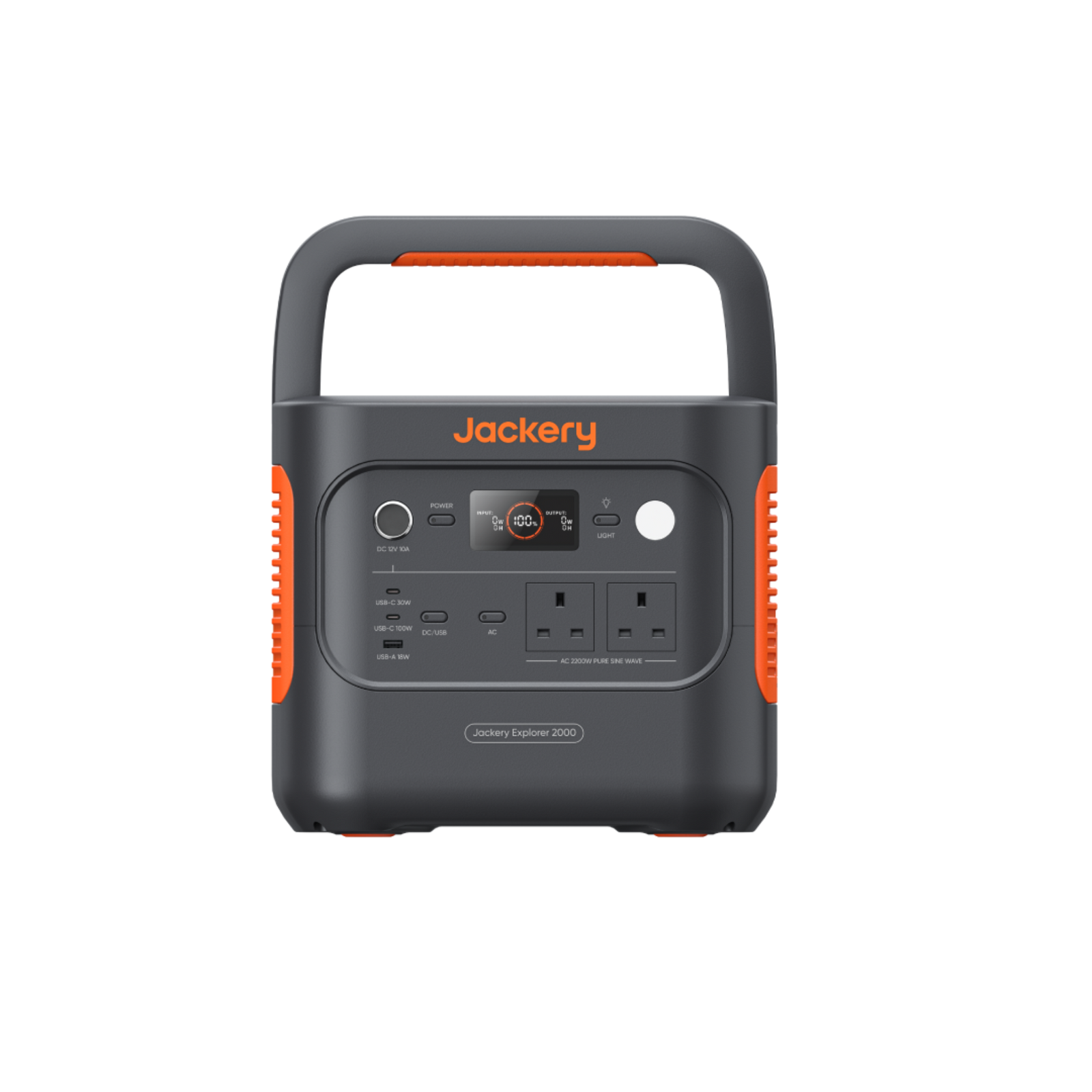 Explorer 2000 v2
FORGE
2,042Wh · 2,200W AC
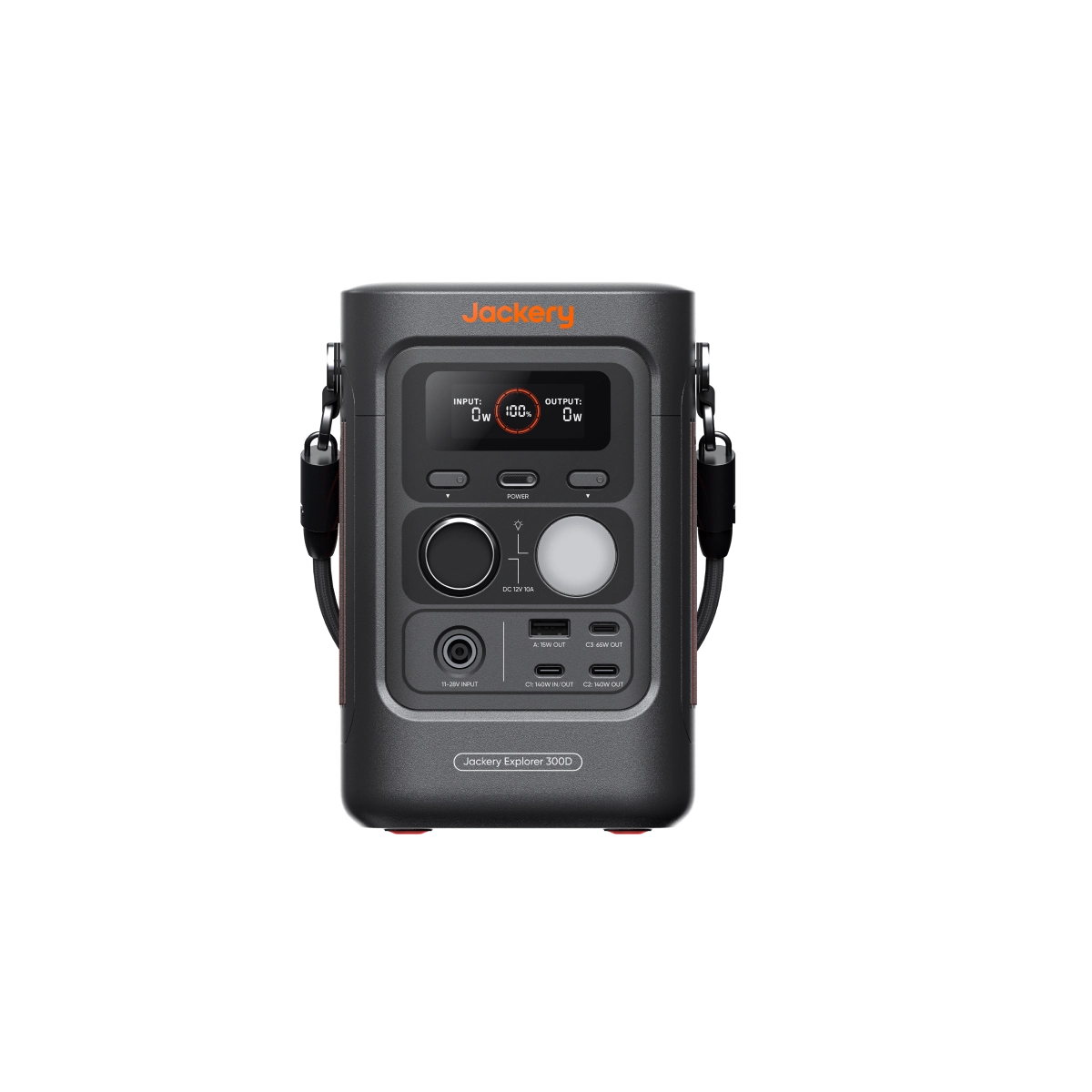
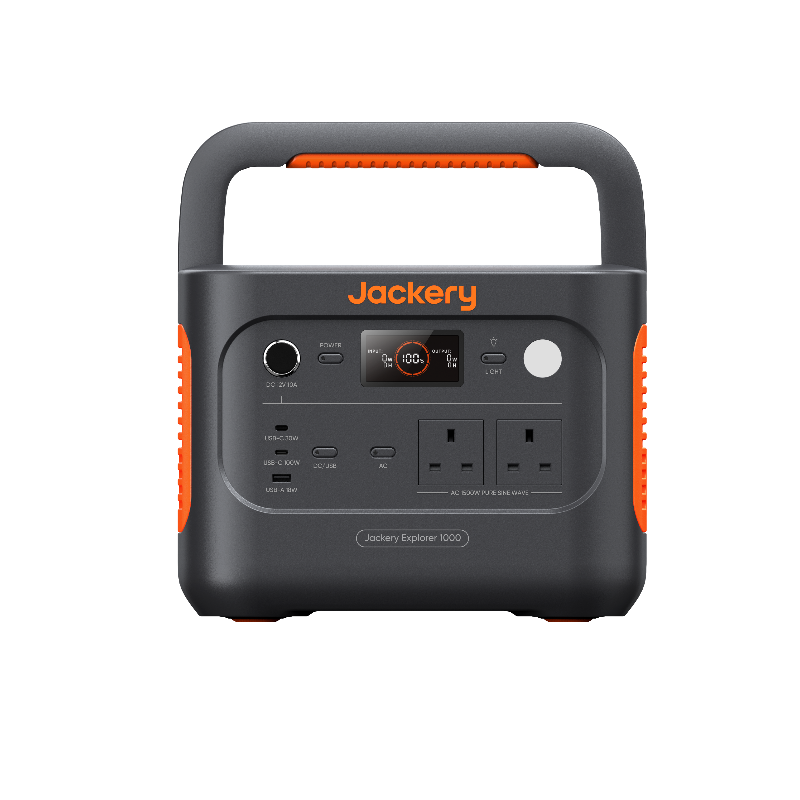
The 240 v2 is the quick grab-and-go AC unit. The 300D is the compact DC and USB specialist. Kindle, the 1000 v2, is the weekend all-rounder. Forge, the 2000 v2, carries serious reserve capacity. Each can operate away from the AGM, outside Vanilla, in the awning or wherever cameras, drones, laptops and ordinary life need electricity.
HARVEST IT HERE.
CARRY IT THERE.
☀ SOLAR→SMARTSOLAR→AGM→ANDERSON→JACKERY
🚐 ALTERNATOR→ORION→AGM→ANDERSON→JACKERY
The Anderson route lets energy collected from sunlight or while driving continue into portable storage when the AGM is healthy and the available charging capacity allows. The Anderson connector is the robust physical bridge; the appropriate fused cabling and the Jackery’s supported input still govern the safe current and charging rate.
WHEN THE RESERVE
FLOWS BACK.
JACKERYSTORED DC ENERGY→230V ACINVERTER OUTPUT→BLUE SMARTCONTROLLED AGM CHARGE→ANDERSONFUSED CONNECTION→110Ah AGMVANILLA’S 12V HEART
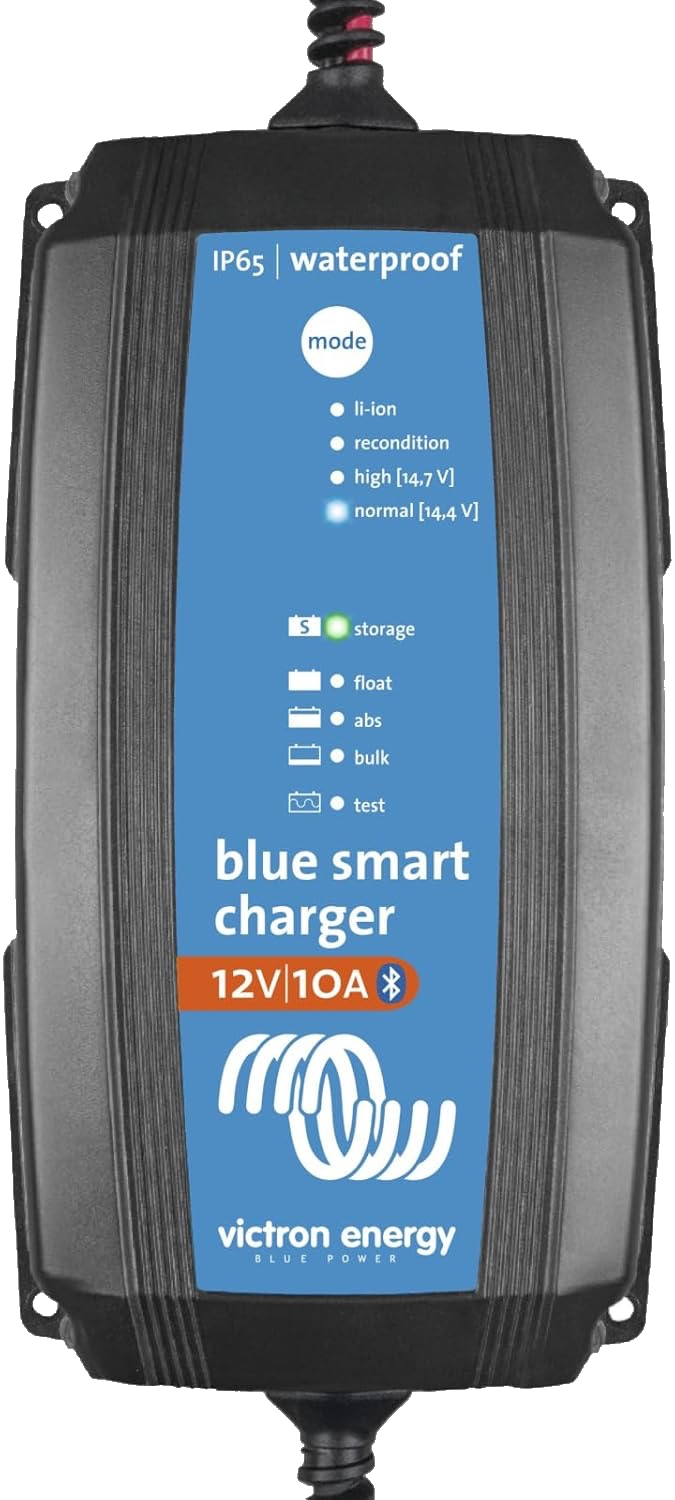
If Vanilla’s AGM is getting low while one of the AC-equipped Jackerys has plenty stored, the Jackery can supply the Victron Blue Smart charger. The charger then gives the AGM a properly controlled charge through the Anderson connection.
That route is DC → AC → DC, so conversion losses are unavoidable. I am buying flexibility and emergency reserve—not claiming maximum theoretical efficiency. It lets a Jackery act as a removable energy bank for Vanilla without replacing the traditional 12V system.
BLUE SMART AGM PROFILE
- Battery profile
- AGM / Normal
- Absorption
- 14.40V
- Float
- 13.80V
- Storage
- 13.20V
- Recondition
- OFF
- Night mode
- OFF
- Low-current mode
- OFF
THE DEVICE WATCHING
EVERY AMP.
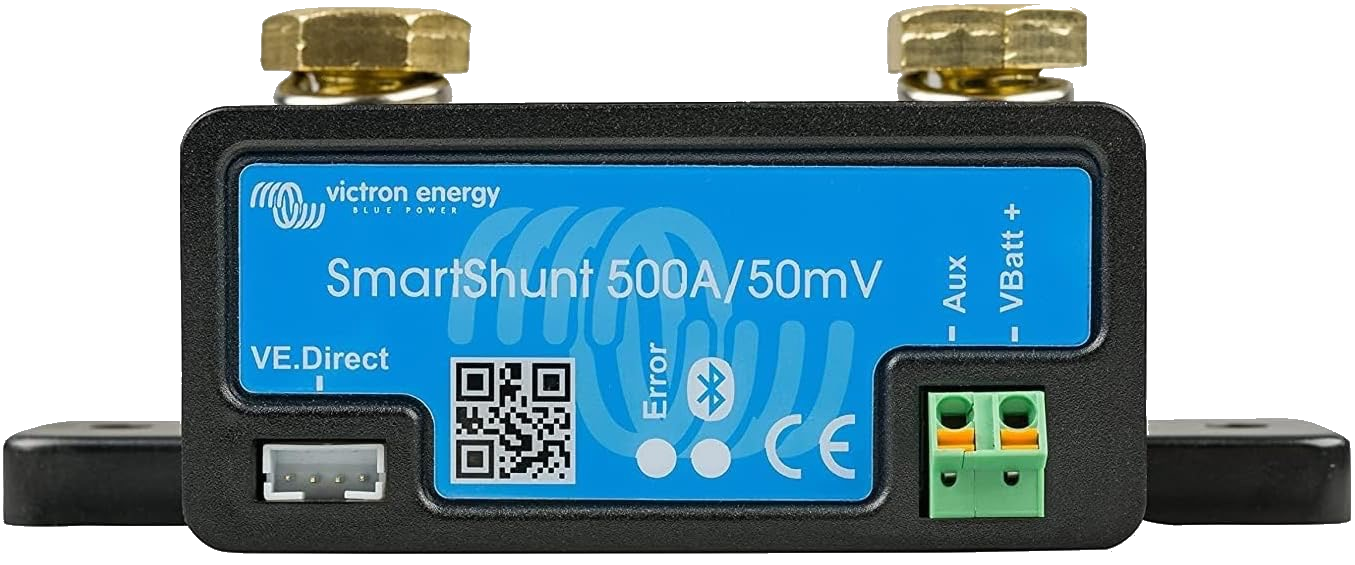
The SmartShunt does not charge the battery. It measures voltage and the current entering and leaving the AGM, then uses those measurements, Peukert behaviour and charge efficiency to calculate state of charge and time remaining.
The 13.2V charged-voltage setting is a synchronisation threshold used alongside tail current and detection time. It is not Vanilla’s main charging voltage. Through the VE.Smart network named VANILLA, the SmartShunt can share battery-voltage sensing with the SmartSolar; compatible temperature sensing can be shared later if the right sensor is added.
SMARTSHUNT↔VE.SMART
VANILLA↔SMARTSOLAR
VANILLA↔SMARTSOLAR
SMARTSHUNT SETTINGS
- Battery capacity
- 110Ah
- Charged voltage
- 13.2V
- Tail current
- 4%
- Charged detection time
- 3 minutes
- Peukert exponent
- 1.25
- Charge efficiency
- 95%
- Current threshold
- 0.10A
- Time-to-go averaging
- 3 minutes
- Discharge floor
- 50%
WHAT DOES MY AGM
VOLTAGE MEAN?
Use these only when the battery is rested—not actively charging and not carrying a significant load.
KEEP A USEFUL
RESERVE.
My normal target is to avoid routinely taking the 110Ah AGM below roughly 50%. That halfway point represents about 55Ah remaining—not 55Ah waiting to be removed without consequence.
70–100%HAPPY50–70%MONITORAROUND 50%THINK ABOUT REPLENISHING
FOLLOW THE
ENERGY.
☀SOLAR
SMARTSOLARMPPT 75/15
🚐ALTERNATOR
ORION12/12-30
110AhAGMSMARTSHUNT MONITORED
⚡EHU
SARGENTEC155
ANDERSONTWO-WAY BRIDGE
🔋JACKERY FLEET
BLUE SMART230V → AGM
Orange paths show the normal energy routes. The blue return path is the deliberate reserve route from an AC-equipped Jackery through the Blue Smart and back into the AGM.
PLANNED NIX
EXPERIMENTS.
No invented readings. These panels are ready for the real numbers.
CAN A JACKERY RECHARGE MY CAMPERVAN?
JACKERY→230V→BLUE SMART→AGM
- Starting AGM SOC
- TO BE MEASURED
- Starting Jackery SOC
- TO BE MEASURED
- SmartShunt amps
- TO BE MEASURED
- Charging watts
- TO BE MEASURED
- Elapsed time
- TO BE MEASURED
- Ending AGM SOC
- TO BE MEASURED
- Ending Jackery SOC
- TO BE MEASURED
- Energy transferred
- TO BE MEASURED
- Estimated losses
- TO BE MEASURED
A DAY OF FREE POWER
MORNING SOC→SOLAR YIELD→HEALTHY AGM→ANDERSON→JACKERY SOC
TIMESOLAR WATTS · AGM SOC · JACKERY SOC
Planned graph. Real data will replace the empty trace after a controlled full-day test.

18 · WHY I BUILT IT THIS WAYMODULAR BY
MODULAR BY
DESIGN.
I could have installed one enormous permanent battery bank. Instead, Vanilla keeps its dependable traditional AGM heart. Victron controls and watches it. Solar works while parked. The Orion harvests while travelling. The Sargent keeps conventional EHU available. The Jackery fleet carries energy wherever the fixed system cannot go.
- Taken outside or into the awning
- Used away from Vanilla
- Charged from Vanilla
- Charged with energy originally harvested from solar
- Used as reserve energy to replenish Vanilla’s AGM
SUN → VANILLA → JACKERY
ROAD → VANILLA → JACKERY
JACKERY → VANILLA
☀ HARVEST🔋 STORE🔄 MOVE📡 MEASURE🚐 EXPLORE
One AGM. Multiple energy sources. Portable reserves. Proper monitoring.
THE POWER DOESN’T JUST FLOW.IT FLOWS WHERE IT’S NEEDED.